Strasbourg
Strasbourg: city of art and history
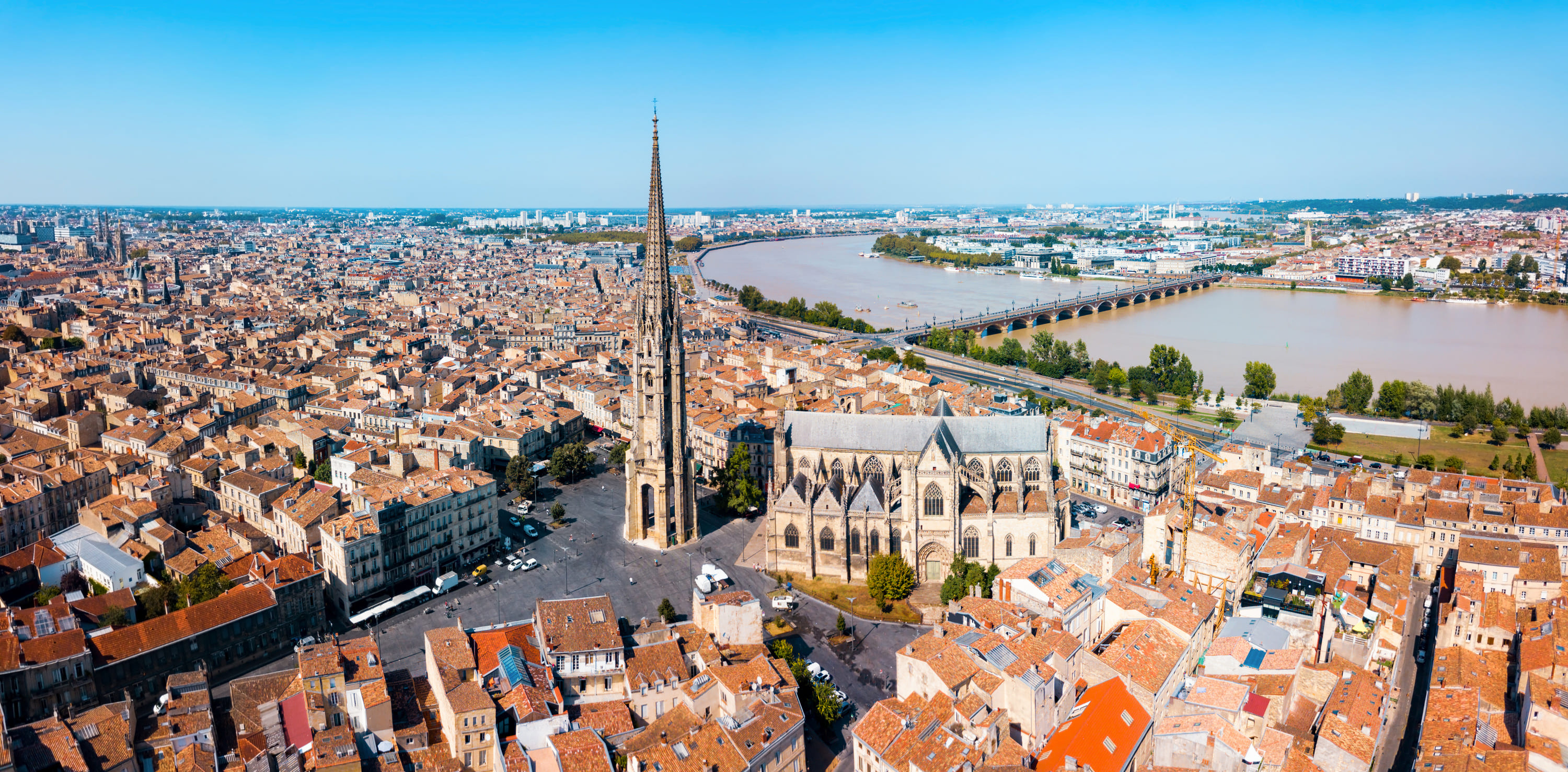
Strasbourg has many faces, from its traditions and old quarters to its famous cathedral and gastronomy. Come and discover this beautiful city in Alsace!

What you need to know about Strasbourg
-
Flight time1H25
-
Dialing code+33
-
Spoken LanguageFrench
-
CurrencyEuro
-
Distance630 km
-
Travel FormalitiesID or passport


Why visit Strasbourg?
Strasbourg, a major European hub, boasts significant port facilities on the Rhine—the continent’s primary waterway and the world’s busiest commercial river.
Did you know? Strasbourg’s entire city center is a UNESCO World Heritage site; its remarkably preserved historical treasures enchant visitors and ensure the city’s enduring appeal as a tourist destination. The Cathedral of Notre-Dame, built from pink Vosges sandstone and a masterpiece of Gothic architecture, remains the city’s undisputed icon. Whether you are an art lover or not, it is a must-see during any visit to Strasbourg.
Another essential experience—one that delights both tourists and locals alike every year—is, of course, the famous Christmas market. A winter tradition since 1570, it draws crowds of visitors attracted by the warm atmosphere and the magical illuminations that light up the entire city. There is nothing quite like strolling through the market while enjoying a delicious hot chocolate and a pretzel, all while admiring the giant Christmas tree and the festive lights. It is the magic of Christmas!
Food lovers certainly won’t be disappointed: Strasbourg boasts a thriving dining scene, particularly in the city center. Every type of restaurant is represented, ranging from modest *winstubs*—where you can savor delicious Alsatian specialties—to prestigious three-star establishments.
Furthermore, thanks to its geographical location and continental prominence, Strasbourg offers a wealth of appealing shops and department stores, all within an easily accessible city center. The city is indisputably the leading commercial hub in eastern France. This is in addition to its status as the seat of major European institutions, including the Council of Europe and the European Parliament.
Planning a trip to Strasbourg from Montpellier? Book your direct flight today.
What to see and do in Strasbourg ?
-
The Grande Île (Historic Centre)
As the first city in France to be entirely designated a UNESCO World Heritage site, the Grande Île encompasses the heart of historic Strasbourg. Half-timbered houses, canals, and cobblestone lanes create a remarkably well-preserved medieval setting, where each district reveals a different facet of Alsatian history.

-
Strasbourg Cathedral
A masterpiece of Gothic art built from pink Vosges sandstone, the cathedral rises to a height of 142 meters and was the tallest building in the world until the 19th century. Its astronomical clock, 13th-century stained-glass windows, and the view from its viewing platform—reached after climbing 332 steps—make it a must-see attraction for anyone visiting Strasbourg.

-
The Petite France district
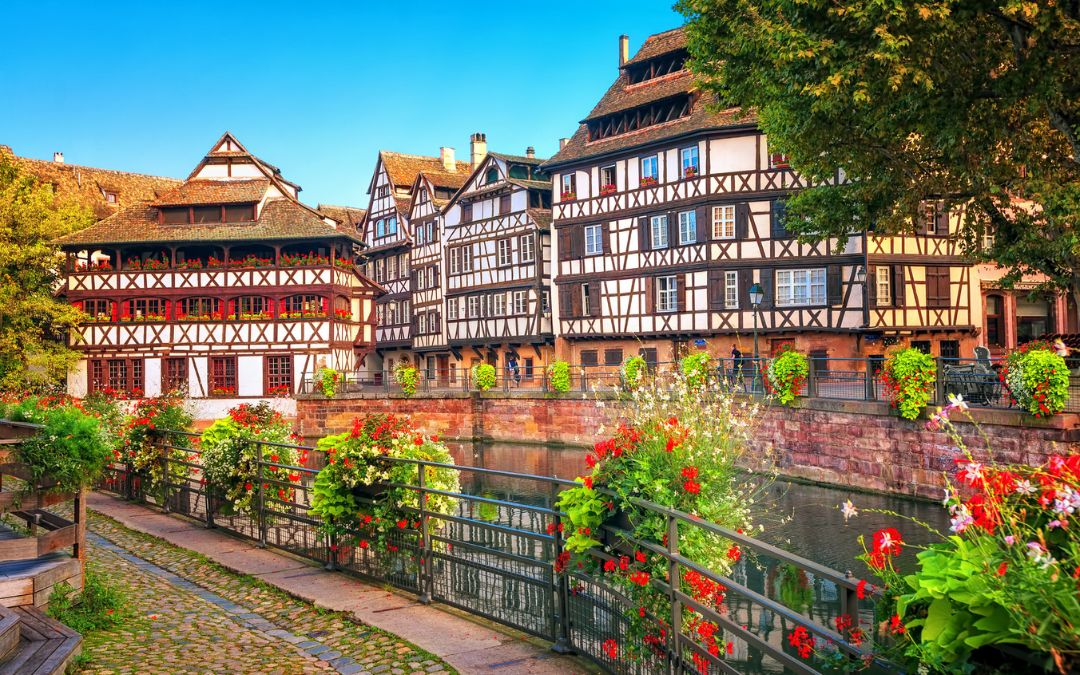
Once the district of tanners, millers, and fishermen, Petite France is Strasbourg’s most picturesque area, featuring leaning half-timbered houses reflected in the canals of the Ill. Flower-adorned bridges, cobblestone lanes, and *winstub* terraces make it the city’s most photographed setting—one that is particularly magical at nightfall.

Must-visit places in Strasbourg
- The Covered Bridges (Ponts Couverts) and the Vauban Dam: Remnants of the city’s medieval defensive system, the Covered Bridges span the four branches of the Ill River, featuring watchtowers dating back to the 13th century. Nearby, the Vauban Dam—a 17th-century military structure—offers one of the finest views of the Petite France district and the cathedral from its panoramic terrace.
- The Rohan Palace: Once the residence of Strasbourg’s prince-bishops in the 18th century, this Classical-style palace now houses three museums: the Decorative Arts Museum, the Fine Arts Museum, and the Archaeological Museum. Its lavishly furnished royal apartments bear witness to the splendor of the episcopal court during the Ancien Régime.
- The Orangerie Park: Strasbourg’s oldest park, originally designed in the style of French formal gardens and later redesigned in the 19th century as an English-style landscape garden. With its semi-free-roaming storks, a lake with a boat landing, and the Joséphine Pavilion—built for the Empress in 1804—it serves as a cherished green retreat for local residents.
- The Neustadt (German District): Built following the annexation of 1871, this urban expansion commissioned by the German Empire features wide avenues and monumental Wilhelmine architecture, with the University Palace and the Place de la République serving as highlights. Designated a UNESCO World Heritage site in 2017, it harmoniously complements the medieval Strasbourg of the Grande Île.
- The European District (The Institutions): Home to the European Parliament, the Council of Europe, and the European Court of Human Rights, this district—characterized by distinctly contemporary architecture—symbolizes Strasbourg’s role as a political capital of Europe. The European Parliament is open to visitors free of charge during certain sessions and open days.
What unique experiences can you have in Strasbourg?
- Visit the Gingerbread Museum: Discover the history of this specialty in a building shaped like the famous Alsatian treat!
- Stop by the Beer Village: From Alsatian and Belgian to international brews, this shop specializing in craft beer has something for every taste!
Gastronomy in Strasbourg: what to eat and drink?
- Baeckeoffe: An iconic Alsatian stew combining potatoes, onions, and three types of meat (pork, beef, and mutton) marinated overnight in Alsatian white wine, then slow-cooked in a terrine sealed with bread dough.
- Choucroute: Finely shredded, naturally fermented white cabbage served hot with an assortment of cured meats—bacon, Strasbourg sausages, and smoked pork shoulder—and potatoes. Alsace’s signature dish, best enjoyed with a glass of Riesling.
- Flammekueche: Thin bread dough rolled out like a pizza, topped with crème fraîche, sliced onions, and bacon lardons, then baked at a very high temperature. Traditionally served as a starter or as a convivial meal to share.
- Fleischschneke: A pasta-dough roll filled with seasoned ground meat, cooked in broth, and then pan-fried until golden. Nicknamed the "meat snail" due to its spiral shape, it is a traditional family dish from the Sundgau region.
- Lewerknepfle: Dumplings made from pork or veal liver, breadcrumbs, and spices; they are poached and served either in broth or alongside sauerkraut. A hearty specialty typical of Alsatian winter cuisine.
- Tourte de la vallée de Munster: A savory pie from the Munster Valley filled with marinated pork collar, stale bread soaked in milk, and mushrooms, all encased in puff pastry.
- Wädele: Pork knuckle slow-roasted until the skin is crispy and the meat is tender enough to melt in the mouth; traditionally served with sauerkraut and potatoes. A hearty classic found in Alsatian *winstubs* (wine taverns). Munster: a soft, washed-rind cow's milk cheese, aged for several weeks in the cellars of the Alsatian Vosges. Recognizable by its pungent aroma, it is traditionally enjoyed with potatoes and caraway seeds.
- Bibeleskäs: a fresh, creamy fresh cheese seasoned with herbs, shallots, and a drizzle of oil, served alongside potatoes cooked in their skins. A simple, refreshing Alsatian specialty.
- Bredele: small Alsatian Christmas cookies available in dozens of varieties—such as cinnamon shortbread, anise stars, and buttery spritz cookies. Prepared by families starting in early December, they are an integral part of the Strasbourg Christmas market tradition.
Must-see events in Strasbourg
- MarchPrintemps des Bretelles (accordeon festival)
- AprilArtefacts Festival
- JuneInternational Music Festival (classical music)
- September - OctoberMusica (Music Festival)
- NovemberJazz d'Or
- DécemberChristmas fair
Have a meal on the Orient Express
If you can’t travel on it, thanks to Les Secrets des Grands Express restaurant you can eat in an identical setting in the train wagon restaurant of the mythical 1928 train.
Frequently asked questions about Strasbourg
-
What is the best time to visit Strasbourg?
Spring (April–June) and autumn (September–October) offer the best conditions for visiting Strasbourg, with mild temperatures and fewer crowds. Summer is pleasant for enjoying the outdoor terraces and the banks of the Ill River. The period from late November to late December is truly unique: it is the time of the famous Christmas market—one of the oldest and most magical in Europe—which transforms the entire city into a fairytale setting.
-
How many days does it take to visit Strasbourg?
A two- to three-day weekend allows you to discover the highlights: the Grande Île, the cathedral, Petite France, and the European Quarter. To also explore the Neustadt and the Parc de l’Orangerie, and to venture out to the Alsace Wine Route or Colmar, allow four to five days. Strasbourg is an excellent base for exploring the whole of Alsace.
-
Is Strasbourg a suitable destination for families with children?
Strasbourg is a very family-friendly destination. Boat trips on the Ill, the Parc de l’Orangerie—with its storks and petting zoo—and the winter Christmas market will delight children of all ages. The compact, pedestrian-friendly historic center and the highly accessible tram network make getting around with the family very easy.
-
Is it easy to get around Strasbourg as a tourist?
Strasbourg is one of the most bike-friendly cities in France, boasting over 600 km of cycle paths and an extensive bike-sharing service. The tram network, with its six lines, efficiently serves the entire city and its surrounding areas. The historic center is largely pedestrianized and very easy to explore on foot.
-
Do you need a visa to travel to Strasbourg from Montpellier?
No. Strasbourg is a French city; no visa, passport, or special formalities are required to travel there from Montpellier. A simple form of identification is sufficient, just as for any travel within the country.
-
When does the Strasbourg Christmas market take place?
The Strasbourg Christmas Market traditionally takes place from late November to December 31, across nearly ten locations throughout the city. Established in 1570 under the name "Christkindelsmärik" (Market of the Christ Child), it is considered one of the oldest Christmas markets in Europe. The exact dates vary slightly from year to year and are announced a few months in advance.
Useful links for your trip to Strasbourg
To go further
-
Travel formalities and documents
Everything you need to know and do before taking your flight.
-
Travel assistance
All the information you need to travel: rights, advice, information on underage travellers and pet travel
-
Luggage
Preparing your hand luggage or hold luggage in important step before your trip. That's why it's essential to know how to prepare your luggage properly.