Dublin
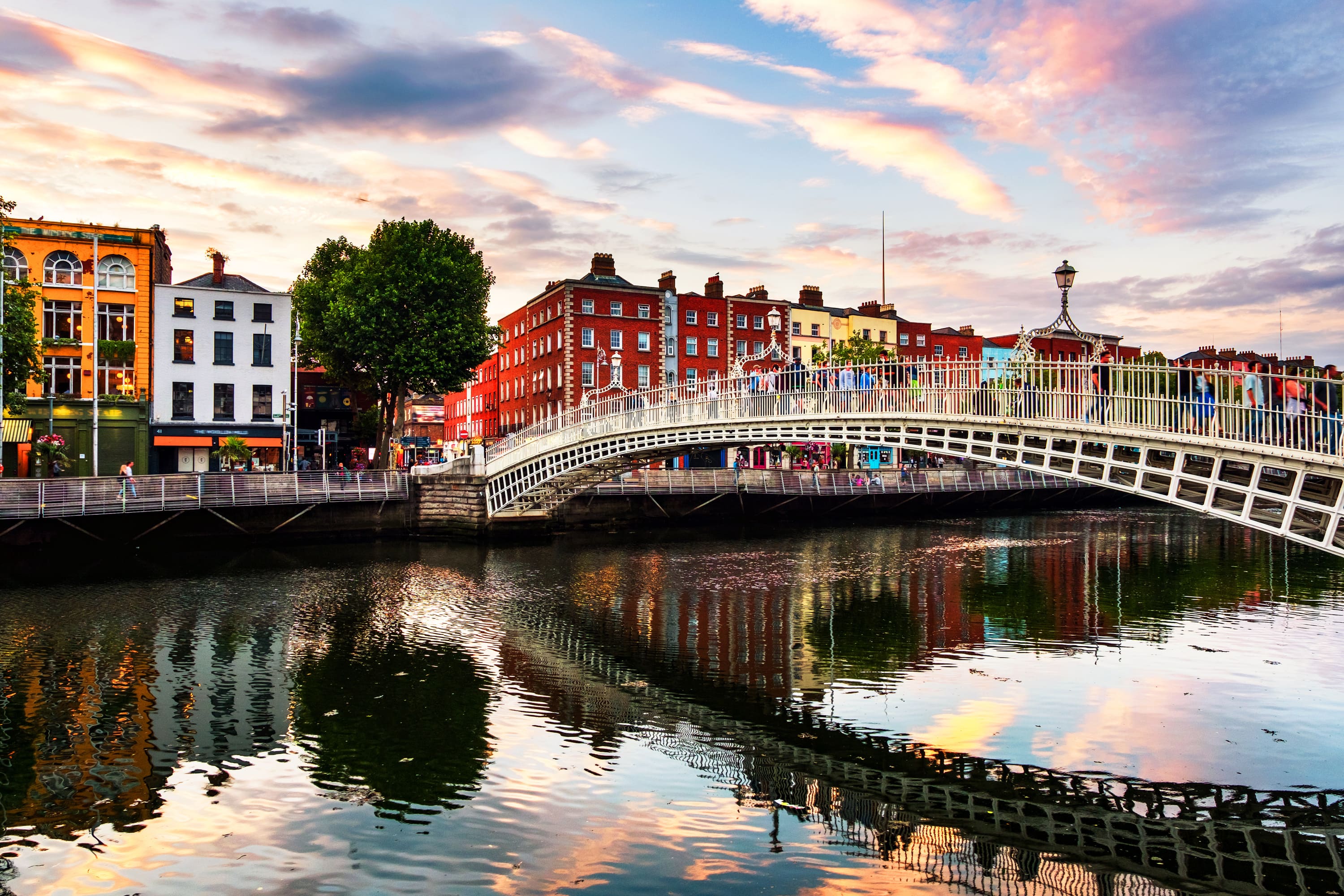
Vibrant greenery, morning mist on the Liffey and the warmth of the pubs in the evening — Dublin is a city to be experienced as much as visited.

What you need to know about Dublin
-
Flight time2H20
-
Dialing code+353
-
Spoken LanguageEnglish / Irish
-
CurrencyEuro
-
Time difference-1H
-
Travel FormalitiesValid national identity card or passport


Why visit Dublin?
Feeling like a change of scenery? Now is the perfect time for a getaway to Dublin! Located on the east coast of the aptly named "Emerald Isle", Dublin was built around a medieval core, and later around its castle. A city on a human scale, perfect for exploring on foot or by bike, the Irish capital packs 1,000 years of history into its streets — from its Viking roots along the River Liffey to its medieval churches, elegant Georgian streets and majestic buildings that stand as a legacy of the British era.
From that Georgian period (18th century), Dublin has preserved its finest architectural treasures, such as the iconic red-brick buildings found around Merrion Square, Fitzwilliam Square and Parnell Square, where elegantly coloured doors seem to extend a warm "welcome". Nearby, Trinity College is equally a gem of classical architecture. A landmark of Irish history and culture, Trinity College is the oldest university in Ireland. Founded in 1592, it is a true institution, whose library houses the exhibition of the Book of Kells, one of the most magnificent illuminated manuscripts of the Middle Ages.
The birthplace of some of the greatest names in literature, music and design, Dublin has inspired generations of artists. A true literary capital — recognised as such by UNESCO — Dublin can proudly claim four Nobel Prize winners in Literature: George Bernard Shaw, William Butler Yeats, Samuel Beckett and Seamus Heaney.
If you enjoy painting, don't miss the National Gallery or the Dublin City Gallery, which notably houses the authentic studio of Francis Bacon, transferred from London in 2001. But music also runs through Dublin's veins: this is where enormous stars such as U2, Sinead O'Connor and Thin Lizzy got their start, not to mention the more traditional sounds of The Dubliners and The Chieftains.
For the full Irish pub experience, head to the Temple Bar district. Located in the heart of Dublin, this neighbourhood pulses with remarkable energy, day and night. It is a must-visit for discovering the warm atmosphere of the pubs — wonderful social hubs where the Irish come to meet and mingle: a true social institution of the Emerald Isle! To the west of the old town, on the south bank, the Liberties Quarter offers a different side of Dublin — more working-class, but also more authentic. This is where the entertaining Guinness Storehouse lets you discover the secrets behind the famous stout — and sample it too, in moderation, of course…
For a truly authentic Dublin experience, don't miss the greyhound races either, held at venues including Shelbourne Park and Harold's Cross: a one-of-a-kind spectacle that Dubliners attend in the evenings after work, to bet on the fastest dogs.
For a more family-oriented stay, there is no shortage of activities: a stroll through Dublin Zoo, a visit to the Iveagh Gardens with their fountains and waterfall, a walk through St Stephen's Green or a picnic in Phoenix Park — home to the presidential palace (Áras an Uachtaráin) and even a herd of wild deer!
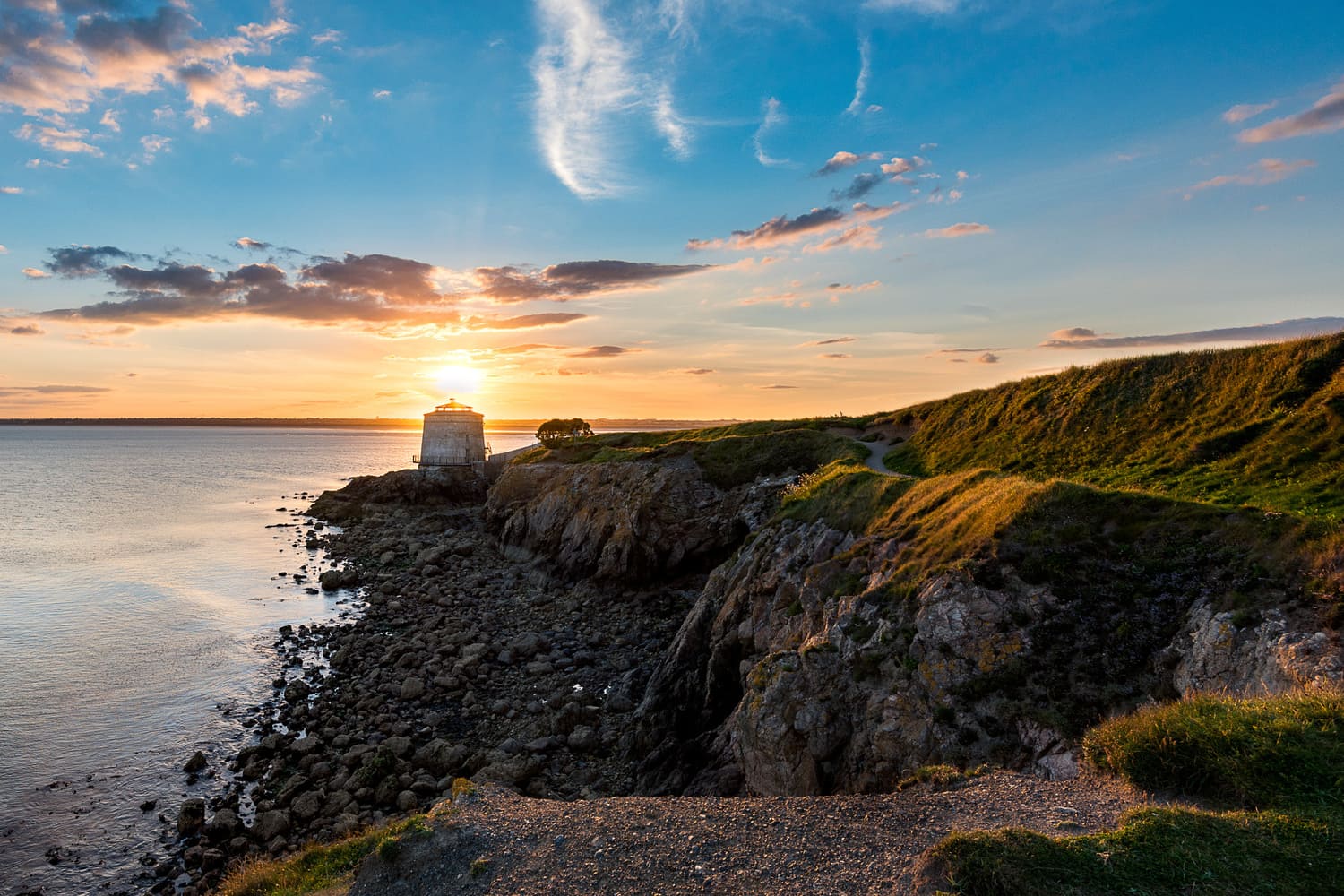
In the surrounding area, between sea and mountains, County Dublin also holds countless treasures. Following the horseshoe-shaped Dublin Bay from Howth to Dalkey, you might take a bracing swim at the Forty Foot in Sandycove, a boat cruise to the islands departing from Malahide, a sailing session at Dún Laoghaire or a kayak trip up the River Liffey. You could even set off on a hike in the Dublin Mountains: spanning the Wicklow Mountains National Park and the thousand-year-old monastic site of Glendalough, these heather-covered hills are filled with spectacular views and age-old legends !
What to see and do in Dublin?
-
Old Jameson Distillery
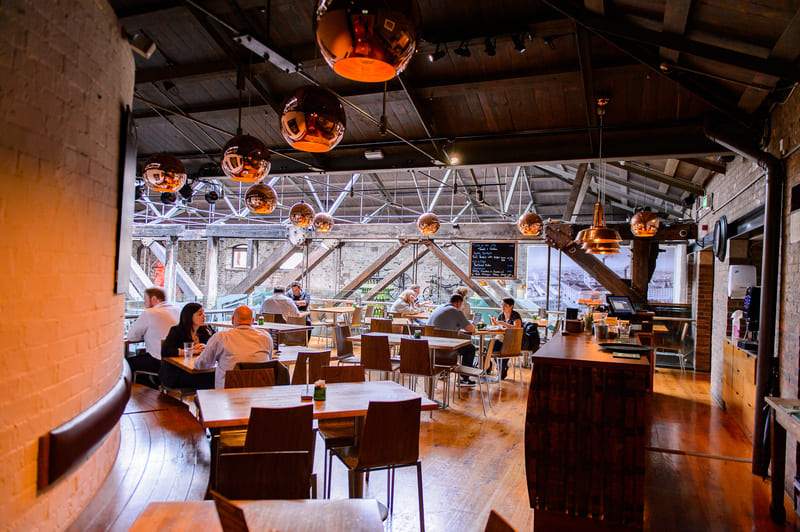
Discover the secrets behind the famous Irish whiskey at this historic distillery. Enjoy an interactive guided tour with tasting, and even the chance to become an "official taster" for a truly immersive experience.
-
Christ Church Cathedral
A majestic medieval cathedral founded in 1030, the oldest in Dublin. Impressive Norman architecture, a remarkably well-preserved medieval crypt, and a covered bridge connecting it to the former synodal palace.

-
National Museum of Ireland
Free admission to this exceptional museum housing Ireland's archaeological and historical treasures. Collections of Celtic goldwork, Viking artefacts and medieval objects, including the famous Ardagh Chalice.

Must-sees in Dublin
- IMMA (Irish Museum of Modern Art): Free admission to this museum housed in the elegant 17th-century Royal Hospital Kilmainham. Collections of Irish and international contemporary art in an exceptional architectural setting surrounded by gardens.
- Dublin Writers Museum: A tribute to Ireland's great writers (Joyce, Wilde, Beckett, Yeats) set in an elegant Georgian townhouse. Rare manuscripts, first editions and personal mementos trace Ireland's extraordinary literary tradition.
- Hugh Lane Gallery: Free admission to this municipal art gallery housing a remarkable collection of Impressionist and modern Irish art. Don't miss the reconstruction of Francis Bacon's Paris studio.
- Little Museum of Dublin: A small, intimate and captivating museum telling the story of 20th-century Dublin through everyday objects and mementos donated by Dubliners. Anecdote-filled guided tours in a Georgian townhouse.
- Irish Whiskey Museum: An interactive journey through the history of Irish whiskey, from its monastic origins to its current revival. Comparative tastings of different styles and an exploration of distillation techniques.
- Dublinia Museum: A fun and interactive dive into Viking and medieval Dublin. Life-size reconstructions, authentic archaeological finds and a panoramic view over the historic city from St Michael's Tower.
- Chester Beatty Library: Free admission to this exceptional collection of manuscripts, rare books and art objects from around the world. Illuminated treasures, Egyptian papyri and Islamic manuscripts, beautifully displayed in a modern setting within Dublin Castle.
- Powerscourt House: A magnificent 18th-century Palladian mansion located 20 km south of Dublin. Spectacular gardens ranked among the finest in Europe, featuring waterfalls, Italian terraces and views over the Wicklow Mountains.
Unique experiences in Dublin
- Kilmainham Gaol: A former prison steeped in Irish history, where the leaders of the 1916 Rising were held. A moving tour of the austere cells and execution yard — a powerful testament to the struggle for independence.
- Drinks in a church: The faithful worship a different god at The Church! Arthur Guinness was married here in 1761, and his bust presides over the end of the bar — yes, a bar, because this former church now welcomes guests for a pint or a taste of Irish cuisine. What an atmosphere!
- Become a leprechaun at the Leprechaun Museum: You know that little red-bearded fellow in the tall green hat? Well, he has his very own museum in the Irish capital — and quite an unusual one at that! From the moment you step inside, you are shrunk to the size of this legendary sprite and immersed in an environment of oversized furniture. A visit that delights adults and children alike!
Dublin and Irish specialities
- Irish breakfast: The traditional full Irish features sausages, bacon, baked beans, fried tomatoes and eggs cooked to your liking. Variations may include mushrooms, hash browns, white or black pudding, smoked salmon or haddock, all served with toast and sometimes a slice of soda bread.
- Irish Stew (national dish): A hearty stew made with mutton, lamb or beef.
- Coddle (or Dublin coddle): Sausages, salt pork, potatoes and onions slow-cooked together.
- Corned beef and cabbage: Corned beef paired with wedges of boiled green cabbage seasoned with herbs (thyme and parsley), typically served with potatoes.
- Smithwick's: A red ale with a light caramel flavour.
- Irish coffee: A cocktail of hot coffee, Irish whiskey and sugar, topped with a dash of cream.
Frequently asked questions about Dublin
-
What is the best time to visit Dublin?
The months of May to September offer the most pleasant conditions for visiting Dublin, with mild temperatures and longer days. The Irish summer remains cool compared to southern Europe, but it is the ideal season for enjoying the parks, festivals and outdoor terraces. Autumn and spring appeal to travellers who prefer to avoid the tourist crowds.
-
How many days do you need to visit Dublin ?
A stay of three to four days is enough to take in the highlights of Dublin: the Temple Bar district, Trinity College and the Book of Kells, the castle, the museums and the iconic pubs. To also explore the surrounding area — the Howth cliffs, the Glendalough valley or the Wicklow Mountains — allow five to seven days instead.
-
What language is spoken in Dublin, and is it worth knowing a few basic words ?
English is the everyday language in Dublin. Irish (Gaelic) is the country's official language, but it is spoken by relatively few people outside certain rural regions. No particular language knowledge is required to travel to Dublin: the city is very accessible to French speakers, and Dubliners are well known for their warm hospitality. A basic grasp of English will help you blend in effortlessly.
-
Is Dublin a good destination for families with children ?
Dublin is an excellent family destination, though it is also especially popular with young professionals. The city offers a wide range of child-friendly activities: the zoo within Phoenix Park, the Marine Life Aquarium in Bray, interactive museums and large green spaces such as the venerable St Stephen's Green. Safety, accessible public transport and Ireland's welcoming culture make it a relaxed and enjoyable destination for travelling with children of all ages.
-
Is it easy to get around Dublin as a tourist ?
Dublin is a very accessible city for tourists. The bus network covers the entire urban area, and the Luas tram connects the main neighbourhoods and points of interest across its two lines. The city centre is a pleasure to explore on foot, and a good number of self-service bikes are available. For day trips outside the city, car hire or the DART and Intercity train services are practical and well-organised options.
To go further
-
Travel formalities and documents
Everything you need to know and do before taking your flight.
-
Travel assistance
All the information you need to travel: rights, advice, information on underage travellers and pet travel
-
Luggage
Preparing your hand luggage or hold luggage in important step before your trip. That's why it's essential to know how to prepare your luggage properly.